PP vs PET vs PLA Cups: The Complete Guide to Choosing the Right Cup for Your Restaurant
الفرق بين أكواب PP و PET و PLA: دليلك الكامل لاختيار الكوب المناسب لمطعمك
By Jory Pack Team · January 20, 2026 · 8 min read
Every plastic cup type has its right and wrong use cases. Learn the a differences between PP, PET, and PLA cups in heat resistance, transparency, price, and environmental impact. A practical guide to help you pick the perfect cup for your restaurant or café, whether you serve hot coffee, cold
PP vs PET vs PLA Cups: The Complete Guide to Choosing the Right Cup for Your Restaurant
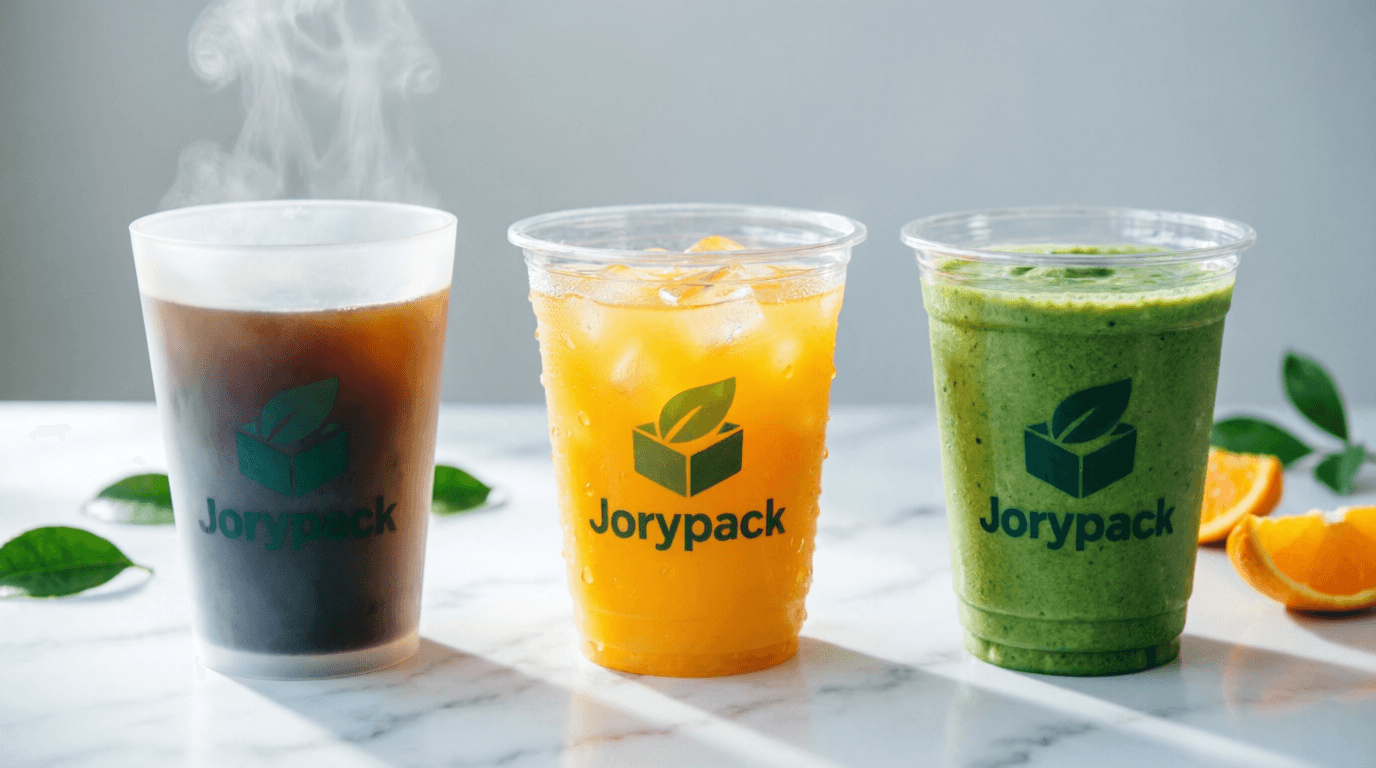
![Hero image: Three cups side by side — PP, PET, and PLA — with Jorypack logo]
If you walk into any café or restaurant in Saudi Arabia and look at the cups they use, you'll notice they're not all the same. Some are crystal clear, some are hazy, some are labeled "eco-friendly." The difference isn't just appearance — it's the type of plastic itself. Each one has a right use case, and a wrong one.
In this article, we break down in detail the three most common cup types on the market: PP, PET, and PLA, and how to choose the right one for your restaurant or café.
First: Why Does Cup Type Matter?
Cup material isn't just a technical detail. It has direct impact on:
- Customer safety — the wrong cup with a hot beverage = chemicals leaching into the drink
- Product presentation — a hazy cup ruins the visual appeal of a colorful juice
- Operating cost — the price difference between types can be 3x
- Brand image — an "eco-friendly" cup attracts a specific customer segment
- Beverage compatibility — the wrong cup deforms or fails with heat
Let's get into the details.
1. PP Cups (Polypropylene)
What is it?
PP is an industrial plastic made from petrochemicals, with recycling code #5 (♳5). It's one of the most widely used plastics in the food and beverage world.
Strengths:
- Handles high heat — up to 100–120°C, perfect for hot drinks
- Microwave safe — you can reheat in it without issues
- Flexible and durable — doesn't crack easily, holds up under pressure
- BPA-free — no exposure to that harmful chemical found in some other plastics
- Chemical resistant — doesn't react with acidic or oily drinks
- Relatively cheaper than other types
Weaknesses:
- Hazy / not fully transparent — even when called "clear," it's never as clear as PET
- Less premium appearance — doesn't give that high-end feel
- Limited recyclability in Saudi Arabia compared to PET
Ideal uses:
- ✅ Hot coffee and tea
- ✅ Soups and hot beverages
- ✅ Ice cream and desserts that go in the freezer
- ✅ Food containers that get microwaved
- ✅ Delivery cups for hot drinks
2. PET Cups (Polyethylene Terephthalate)
What is it?
PET is a crystal-clear industrial plastic with recycling code #1 (♳1). It's the same plastic used in mineral water bottles and soda bottles.
Strengths:
- 100% transparent like glass — shows every detail of the drink inside
- Premium shine and feel — gives products a high-end look
- Very lightweight — noticeably lighter than PP
- Widely recyclable — the most recycled plastic in the world
- Shatter resistant — doesn't break easily like glass
- Preserves taste — doesn't transfer any flavor to the drink
Weaknesses:
- Can't handle heat — deforms above 60–70°C, completely off-limits for hot drinks
- Not microwave safe — releases chemicals when heated
- Generally pricier than PP
- Relatively brittle under strong pressure
Ideal uses:
- ✅ Iced coffee and cold drinks
- ✅ Fresh juices and smoothies
- ✅ Milkshakes and frappuccinos
- ✅ Water and carbonated drinks
- ✅ Salads and desserts where you want presentation to shine
Golden rule: PET = cold only. PP = hot and cold.
3. PLA Cups (Polylactic Acid)
What is it?
PLA is a bioplastic made from renewable natural sources like corn starch or sugarcane. It's the go-to choice for restaurant owners who want to market sustainability and environmental responsibility.
Strengths:
- Natural, renewable source — not petroleum-based
- Biodegradable (compostable) — breaks down under specific conditions
- Looks nearly as clear as PET — visually appealing
- Completely free of BPA and petrochemicals
- Strong marketing angle — environmentally-conscious customers appreciate it
- Lower carbon footprint in manufacturing
Weaknesses:
- Cannot handle heat at all — starts deforming at 45–50°C, worse than PET
- Significantly pricier than PP and PET (often 2–3x)
- Composting requires specific industrial conditions — it's not really "toss it anywhere and it disappears." It needs specialized composting facilities
- Saudi Arabia's composting infrastructure is limited — meaning the environmental benefit is smaller than advertised
- Shorter shelf life in storage
Ideal uses:
- ✅ Cold drinks at sustainability-focused cafés
- ✅ Organic juices and healthy food shops
- ✅ Events and occasions where you want to demonstrate environmental commitment
- ✅ Brands targeting Gen Z and millennial segments
Quick Comparison Table
| Criterion | PP | PET | PLA |
|---|---|---|---|
| Source | Petroleum | Petroleum | Renewable plant-based |
| Transparency | Hazy/semi-clear | 100% clear | Clear |
| Heat tolerance | Up to 120°C ✅ | Up to 60°C ⚠️ | Up to 50°C ⚠️ |
| Hot drinks | ✅ Yes | ❌ No | ❌ No |
| Cold drinks | ✅ Good | ✅ Excellent | ✅ Excellent |
| Microwave | ✅ Safe | ❌ Not safe | ❌ Not safe |
| Recycling code | ♳5 | ♳1 | ♳7 |
| Recyclability in KSA | Medium | High | Low |
| Biodegradable | No | No | Yes (with conditions) |
| Relative price | $ | $$ | $$$ |
| Appearance | Standard | Premium | Premium/Eco |
How to Choose the Right Type for Your Restaurant
If you run a specialty coffee café:
Go with PP for hot (lattes, cappuccinos, Americanos) and PET for cold (iced coffee, cold brew). This is the most common, field-tested combo.
If you run a juice and smoothie bar:
PET is your first choice, hands down. Transparency showcases colorful juices and boosts product appeal, especially in social media and Instagram photos.
If you run a healthy or vegan restaurant:
PLA gives you a strong marketing edge. Customers who pay for a healthy lifestyle will pay for the environment too. Just factor the extra cost into your menu pricing.
If you run a high-volume fast-food restaurant:
PP is the optimal economic choice. It's durable, cheap, and safe for almost any drink type.
If you run a premium or fine-dining restaurant:
PET for cold gives a luxury look, and PP with professional printing elevates brand perception.
Things Most People Overlook
1. The lid must match the cup type If the cup is PET, the lid must also be PET or cold-rated PP. For hot cups, you need PP with a heat-resistant sip lid. The wrong lid deforms and causes leaks.
2. Wall thickness matters PP at 4mm thickness behaves very differently from PP at 6mm in strength and hand feel. Don't get fooled by a cheaper price without checking thickness.
3. Printing behaves differently on each material PP accepts printing excellently and holds colors well. PET printing can be trickier and requires specific techniques. PLA needs special environmentally-safe inks.
4. Storage is important PLA is sensitive to heat and humidity in storage and can start deforming before use if kept in a hot warehouse.
5. Customers notice the difference Saudi customers have become discerning. Many can tell the difference between a cheap cup and a respectable one, and that reflects in your app ratings.
The Jorypack Golden Rule
There's no single "best" type in absolute terms. What's best depends on:
- The type of drink you serve
- Your brand positioning (economy / mid / premium)
- Your operating budget
- Your target customer segment
The golden combo for most operators:
- PP for hot drinks
- PET for cold drinks
- PLA as a premium add-on for customers who specifically request it
What Makes Jorypack Cups Different?
At Jorypack, we offer all three types with certified specifications:
- ✅ Food-grade PP cups in multiple thicknesses and sizes (4oz to 24oz)
- ✅ Crystal-clear PET cups with high transparency and premium appearance
- ✅ Bio-based PLA cups for environmentally-conscious brands
- ✅ Matching lids for every type, with sip holes and straw slots
- ✅ Full custom printing service with your logo on any cup type
- ✅ Free technical consultation to help you choose the right type and size for your menu
- ✅ Delivery across all regions of Saudi Arabia from our Riyadh warehouse
- ✅ Wholesale pricing for restaurant owners and franchise chains
Ready to Order Cups for Your Restaurant?
Get in touch today and let our team help you choose the perfect fit:
📞 Riyadh: +966 54 323 2399 📧 Email: [email protected] 🌐 Website: jorypack.com 📍 Address: Al Sulay, Al Lusaifa St #7260, Riyadh, 14276
Jorypack — Your partner in safe food packaging since 2019
SEO keywords: plastic cups, PP cups, PET cups, PLA cups, eco-friendly cups, coffee cups, juice cups, beverage packaging Saudi Arabia, Jorypack, café cups
Ready to source packaging for your business?
Get a free quote within 24 hours